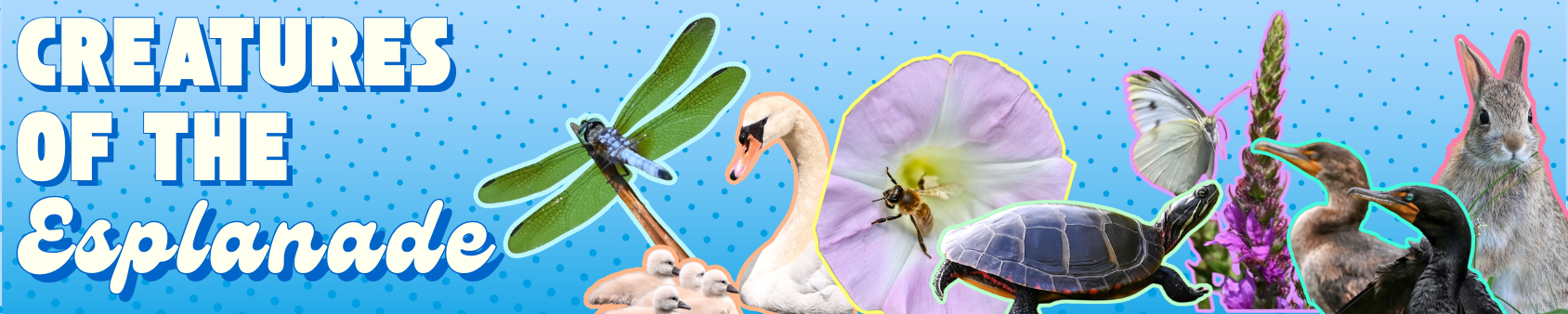
Welcome to the Esplanade Association!

We are the only community-supported nonprofit focused on revitalizing the Esplanade’s natural green space, creating and maintaining new park amenities, and building community through free educational, cultural, and recreational programs for everyone. 

We hope you will follow how we animate and improve the park experience—and ways to get involved!

Special thanks to EA’s 2026 guest speaker and naturalist Stephanie Fletcher for the photos and fun facts!

See her presentation on 25 Species for 25 Years from our Annual Meeting!

(TIME STAMP — 27:20 – 46:28)
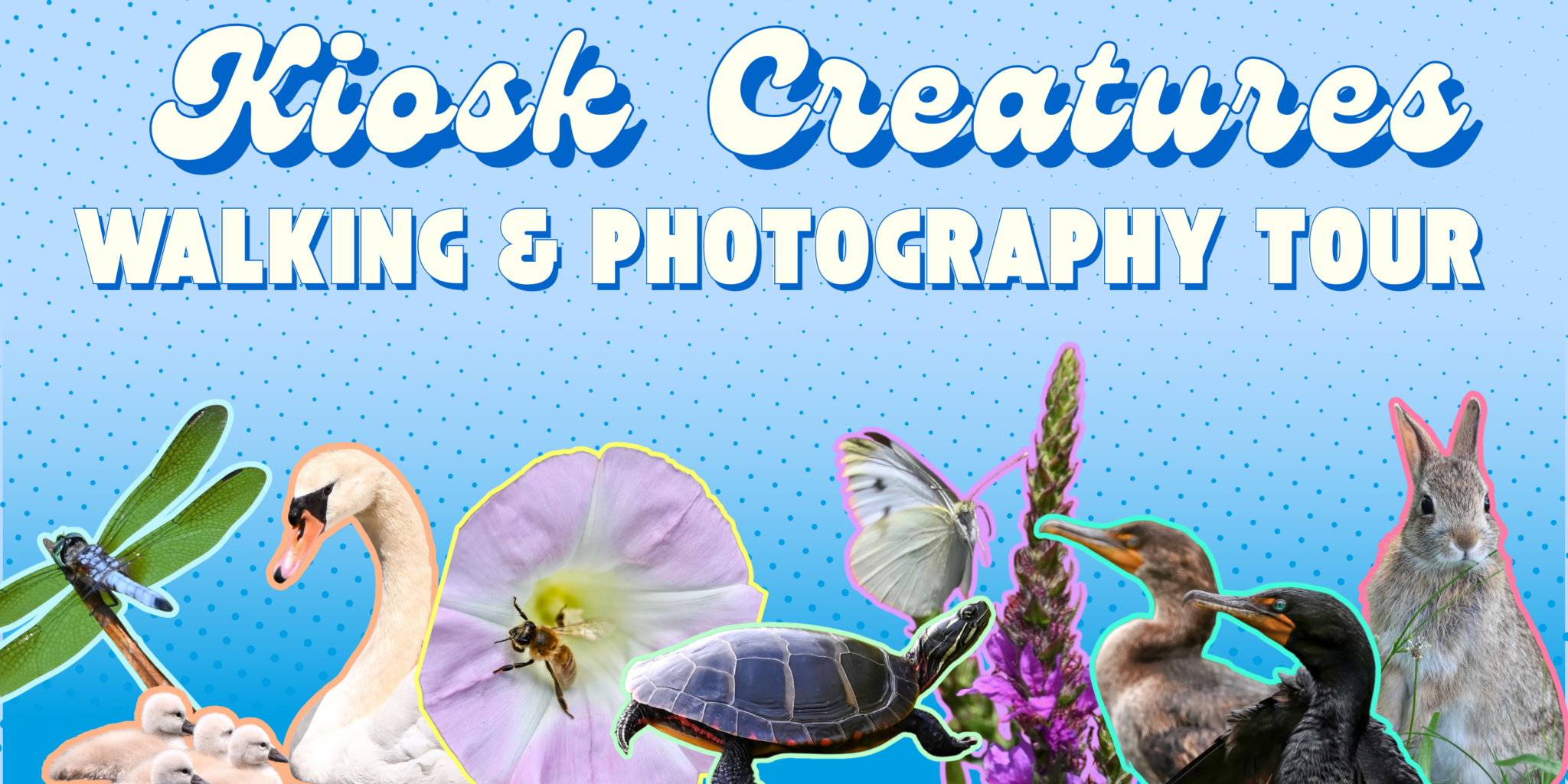
See below for Stephanie’s insights on Esplanade Species, this season’s “Kiosk Creatures”!

Eastern Cottontail

  • Eastern cottontails are voracious eaters that consume roughly 10% to 15% of their body weight in green vegetation daily.
  • In spring and summer, their diet consists almost entirely of tender grasses and just about any other tender plant or flower they can find!
  • In fall and winter, when fresh greens are scarce, they switch to woody vegetation, chewing on the buds, twigs, and bark of young trees and shrubs.
  • If you ever see bark stripped from a bush or young tree along the Esplanade in the winter, it was probably a rabbit!
  • Before spring, we have had wires on EA’s winter light installations and park vehicles nibbled away!
On View: Near Gronk Playground

Butterflies & Moths

  • Butterflies and moths are important pollinators that help plants reproduce by transferring pollen as they feed on nectar, and they serve as a key food source for birds, bats, and other wildlife, making them vital indicators of a healthy ecosystem.
  • Their caterpillars are also an important food source for baby birds. It was recently discovered that Black-capped Chickadees need about 9,000 caterpillars to raise just one brood!
On View: Near Community Boating Inc.

Bees

  • There are many species of pollinators, including bees and bumblebees that call the Esplanade home.
  • Not all bees live in hives. Some bees live in ground nests, some live in woody plant stems. Some are microscopic, others, like bumblebees, are larger. All of them provide critical services to the trees and plants on the Esplanade.
  • Despite their reputation, many bees do not sting—males have no stingers, and most native solitary bees are too busy foraging for pollen and nectar to care about the humans around them.
On View: Near Esplanade Playspace and Fiedler Footbridge

Dragonflies

  • Despite their delicate features, dragonflies are considered one of the most voracious predators in the entire animal kingdom, with a 95% success rate at capturing their prey.
  • They consume about 1/5th their body weight in insects each day, eating things like mosquitoes, midges, gnats, flies, bees, moths and butterflies.
  • Dragonflies are considered extremely efficient at controlling mosquitoes—all we need to do to keep them around is to continue to support a healthy and clean Charles River!
On View: Near Dartmouth St. Footbridge

Black-Crowned Night Heron

  • If seen by day, these chunky herons seem dull and lethargic, sitting hunched and motionless in trees near water.
  • Black-crowned Night Herons become more active at dusk, flying out to foraging sites, calling ‘wok’ as they pass high overhead in the darkness.
  • While numbers of these birds are dwindling in Massachusetts due to habitat loss, you’ll still find a few along the banks of the Esplanade.
On View: Near Fairfield St. Footbridge

Painted Turtle

  • Painted turtles are one of the most common native turtle species in North America.
  • They are known for their vibrant shells, which feature bright red and yellow markings, distinguishing it from the other, introduced species that we see here, the red-eared slider.
  • Painted turtles play a vital role in maintaining the health of freshwater ecosystems by consuming a diverse diet that includes aquatic plants, algae, and small invertebrates, which helps regulate prey populations and cycle nutrients.
  • Their presence often indicates a healthy environment.
On View: Near Mass Ave. Footbridge

Mute Swans

  • Mute swans were introduced to North America in the late 19th century as ornamental birds for parks, estates, and zoos, primarily from Europe.
  • They escaped or were released into the wild, leading to the established populations that we see today.
  • On occasion, you’ll see them swimming or nesting along the lagoon- they are a favorite of many living nearby.
On View: Near Silber Way Footbridge

Double-Crested Cormorant

  • Double-crested cormorants have bright teal-blue eyes. They have excellent eyesight, which is crucial for spotting fish while diving underwater.
  • Their vision is adapted for both aerial and aquatic environments, allowing them to effectively hunt for prey.
  • Double-crested cormorants serve as upper trophic-level predators in aquatic systems, which makes them useful indicators of environmental pollution and helps limit invasive populations.
  • Their presence helping to control invasive fish populations helps maintain species diversity in the Charles River.
On View: Near BU Sailing Pavilion

Eastern Gray Squirrel

  • Eastern gray squirrels are often seen as beggars because they are opportunistic feeders that rely on human food sources, especially in urban areas.
  • Their adaptability and less shy nature make them more likely to approach people for food.
  • Outside of urban areas, the squirrel is considered ecologically essential as a natural forest regenerator, due to their ability to disperse seeds so well.

Common Buttonbush

  • The Common buttonbush is a native shrub that thrives in wetland areas and can tolerate water depths of up to three feet.
  • It is known for its unique spherical white flowers that attract a variety of pollinators, including bees, butterflies and hummingbirds.
  • Meanwhile, it provides food and shelter for all sorts of wildlife, it improves water quality by removing nitrogen and phosphorus runoff, all while providing excellent erosion control.

Kiosk Creatures Walking & Photography Tour

EA, in partnership with Stephanie Fletcher, will lead two guided nature and photography walks through the park! We will walk around 1 mile, identifying species that call Esplanade home and learning how to photograph them. All ages and experience levels are welcome!

STAY IN TOUCH!

JOIN OUR FREE PROGRAMS!
